The Modern Plant Playbook: Palmstreet’s 2025 Takeaways
Palmstreet Official
Live plant collecting has officially gone mainstream. In 2025, Palmstreet passed $100 million in rare plant sales as collectors across the country leaned into a more interactive, community-driven way to discover and trade the plants they love. What started as a home for rare aroids has grown into a broad ecosystem spanning hundreds of plant varietals and collecting styles.
Today, buyers spend an average of 150 minutes a day on the app, connecting with other collectors, sharing care tips, and helping each other uncover unique plants from every corner of the U.S.
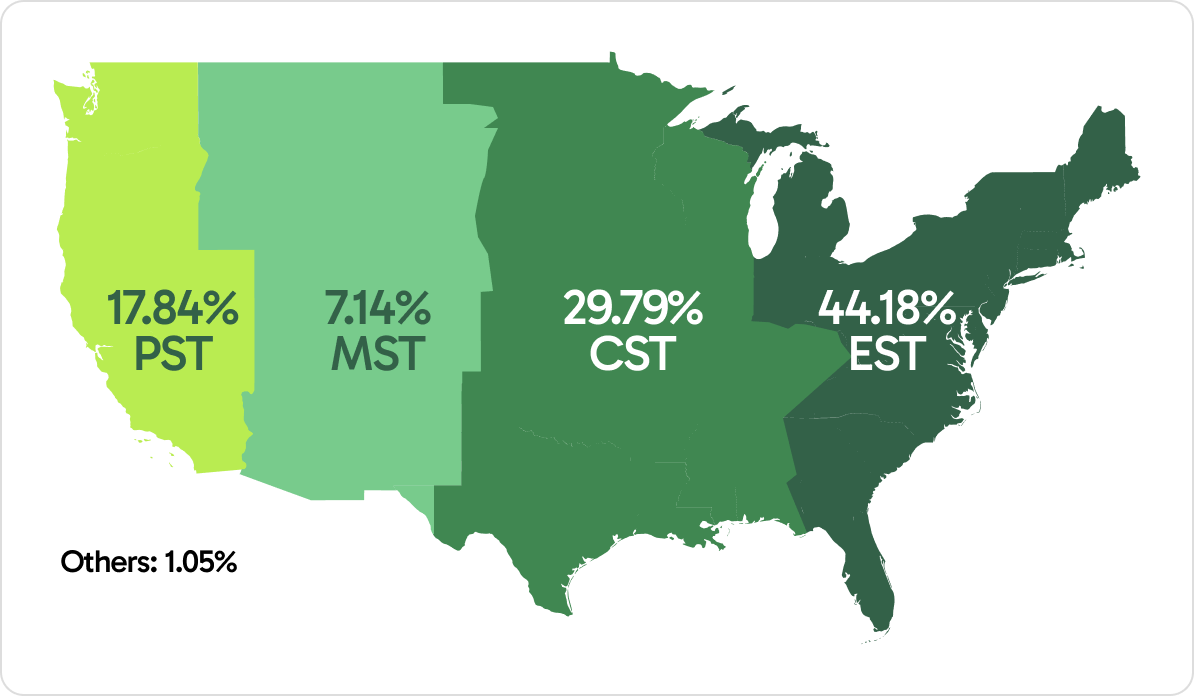
Palmstreet’s community is both diverse and widely distributed, with the highest concentration of buyers in California (12%), Texas (10%), Florida (8%), and New York (5%). This nationwide footprint gives Palmstreet a real-time pulse on what’s gaining momentum in the rare plant world. Below, we break down our Palmstreet user time zones and the key trends shaping 2026.
Palmstreet users are primarily concentrated in the Eastern and Central time zones
Key Trends
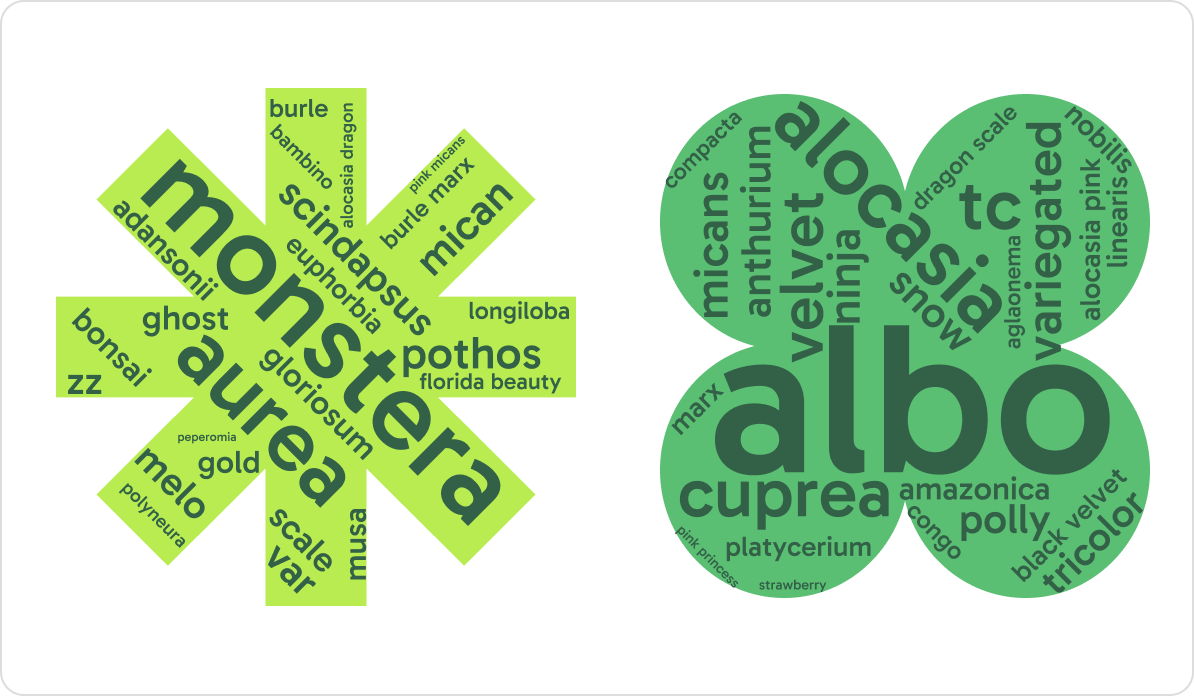
Palmstreet's top search terms of 2025
1. Anthurium continues to anchor the market
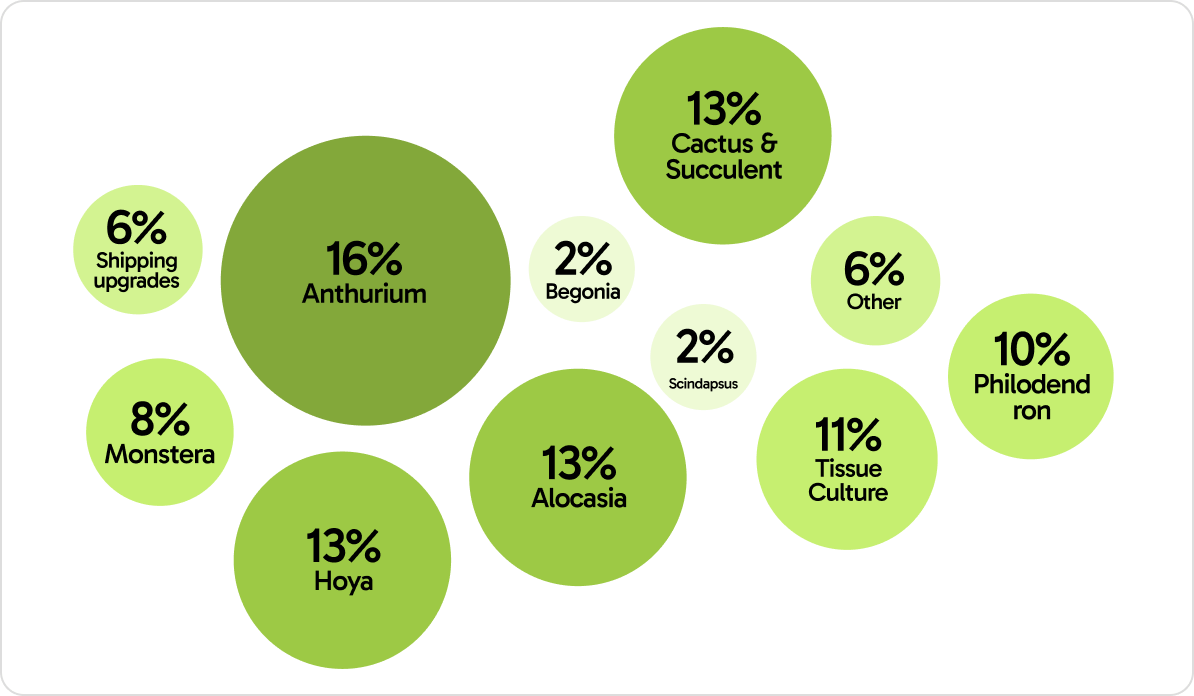
Anthurium remains the defining category in the rare plant space, accounting for roughly 16% of total market share through 2025. Rather than slowing down, the category is entering a new premium phase. Searches for variegated Anthurium jumped 200% this year, fueled by a record breaking $26,000 sale of a variegated Anthurium luxurians “albo marble,” the highest priced sale in Palmstreet history.Anthurium continues to set the benchmark for value, rarity, and collector demand.
2. Alocasia momentum keeps accelerating
Alocasia has become one of the most highly sought after plant types on Palmstreet in the last 6 months. Searches for Alocasia surged 376%, making it the most searched plant group on the platform this year. Growth is being driven from both ends of the market allowing for greater accessibility alongside increasing ultra-rarity.
Tissue-cultured releases helped expand access to premium varieties, driving major gains across core types:
- Pink Bambino (+412%)
- Black Velvet (+471%)
- Ninja (+588%)
- Aurea (+526%)
- Pink Polly (+726%)
- Dragon Scale (+523%)
At the high end, demand is even more dramatic. Searches for Cupreas rose 1,379% as collectors competed for increasingly rare forms. That interest translated directly into sales, highlighted by a $10,000 Black Amy mutation, one of only three known examples. With everything from affordable corms and Tissue Culture to elite, museum-level specimens, Alocasia is shaping up to be one of the most important categories to watch in 2026.
3. Tissue Culture shows steady, meaningful growth
Tissue Culture has quickly become Palmstreet’s fastest-growing plant category in the last 3 months, expanding more than 250% year over year and now representing over 11% of total plant volume. Searches related to Tissue Culture increased 517% as collectors embraced a more approachable entry point into rare genetics.
Interest was heavily concentrated in Alocasia and Monstera Tissue Culture varieties, which made up 60% of Palmstreet’s top 40 search terms. With a steady flow of new cultivars, accessible pricing, and a rapidly growing sub-community, Tissue Culture has become the primary on-ramp for new collectors joining the platform.
4. Hoya and Philodendron remain everyday favorites
Hoya and Philodendron continue to be core pillars of Palmstreet’s plant ecosystem, together accounting for more than 23% of the plant market in 2025. Search growth remained strong across key varieties, led by:
- Florida Beauty (+291%)
- Pink Princess (+237%)
- Micans (+283%)
- Hoya Linearis (+294%)
Collector staples like Variegated Billietiae and Hoya Grey Fairy also held steady demand, keeping both categories central to everyday collecting and well-positioned heading into 2026.
Plant category composition based on H2 2025 sales data